

Short of gift ideas for that person who really does have everything?
Web site Stupid.com, which claims finding a truly stupid gift is an art form, on Tuesday unveiled its second annual list of the top 10 "stupidest" holiday gifts for 2008.
"2008 might have been a bad year for the economy, but it was a great year for stupidity," said Stupid.com's founder Gary Apple. "Weird products seemed to come out of the woodwork this year. There was almost too much stupidity to choose from!"
1. Screaming Chicken, The World's Most Annoying Toy:
This rubber chicken doesn't squeak or squawk. It screams.
2. Wealth Redistribution 2008 Holiday Ornament:
This tree ornament announces that the ornament that used to be there has been removed and given to someone who needs it more. The Redistribution Holiday Ornament will let everyone know you're spreading the wealth whether you want to or not.
3. Mini Guitar Hero:
This miniature version of that mega-hit game is barely 6-inches long but you can still rock out to songs by Queen, Cheap Trick, Nirvana, and The Police.
4. Potty Putter:
Why waste time on the toilet, when you can use it to get ready for the fairway? Potty Putter contains everything you need for an exciting round of golf without leaving your seat including a putting green for around the toilet, mini putter, flag stick and two golf balls.
5. Wasabi Flavored Gumballs:
These potent little green confections offer an intense explosion of wasabi. Strangely, the gum is actually delicious.
6. Men's Underwear Repair Kit:
In this troubled economy, don't throw away your old underwear but repair it with the Men's Underwear Repair Kit. This handy, inexpensive kit provides everything you need to get your unsightly undershorts back into presentable shape.
7. Obama "Yes We Can" Opener:
Every election spawns some interesting products, but this has to be one of the stupidest. To Obama fans, the "Yes, We Can" opener, seizing on his campaign refrain, could be a treasure.
8. "How To Tie A Tie" Tie:
Still struggle with your tie? This stylish tie has simple knot-tying instructions printed right on the front. Just follow the six step-by-step diagrams and you'll look as dashing as George Clooney in seconds.
9. 2009 Dog Poop Calendar:
Each month features a spectacular landscape or breathtaking tableau, but somewhere in every shot there's a pile of dog poop. Distasteful? You bet it is, but the contrast between the beautiful photography and dog poop is remarkable.
10. Pole Dancer Alarm Clock:
When the alarm goes off, dance music plays and disco lights flash. At the same time, a buxom blonde dancer gyrates around a pole under the spinning disco ball.
Friday, December 5, 2008

Thursday, December 4, 2008
Don't miss the parade!

Don't miss the annual City Of Hollywood Candy Cane Parade and your chance to see Jeff Martin in his peppermint tights!
Holiday Office Party!
Remember if you're lucky enough to have a holiday office party, make sure you don't dance on anything other than the floor!
We're having a party...smaller yes...but at least were having one. What about you?
If you plan to go to your office holiday party here's a few things to keep in mind.
We're having a party...smaller yes...but at least were having one. What about you?
If you plan to go to your office holiday party here's a few things to keep in mind.
Wednesday, December 3, 2008
Beauty products
What's in your bathroom drawer, medicine cabinet and shower? shampoo, conditioner, bodywash, eye-makeup remover, mascara, face lotion, lip balm, blush, deodorant, bronzer, eyeliner, nail polish, hair brushes, flat iron, curling iron, crimping iron...the list goes on and on.
A survey by The Environmental Working Group found that the average woman uses 12 personal care products per day. It just show how high-maintenance the modern gal has become and the value we place on physical beauty and appearance.
Check out the 7 things men will never get about beauty.
A survey by The Environmental Working Group found that the average woman uses 12 personal care products per day. It just show how high-maintenance the modern gal has become and the value we place on physical beauty and appearance.
Check out the 7 things men will never get about beauty.
Tuesday, December 2, 2008
Beat the Holiday Stress
‘Tis the season to be jolly... not stressed out!
If the shopping, wrapping gifts, gaining weight, party planning, decorating, cooking, in-laws, going to the office holiday party, working on the holiday, the traffic, finding a parking space at the mall, cleaning the house, travel, and the list go on and on start to stress you.... Don’t panic, here are some tips that could help you have a very jolly season!
And if you need more help, check here.
If the shopping, wrapping gifts, gaining weight, party planning, decorating, cooking, in-laws, going to the office holiday party, working on the holiday, the traffic, finding a parking space at the mall, cleaning the house, travel, and the list go on and on start to stress you.... Don’t panic, here are some tips that could help you have a very jolly season!
And if you need more help, check here.
Monday, December 1, 2008
Make a gift
Nothing captures the spirit of the holidays like a unique gift that's been made with care and love. Here are some great homemade gift ideas.
While price comparison shopping, shopping sales and pruning your gift list are viable ways to save some money on gifts, there are additional creative ways to save. There's nothing wrong with spending money if you have it, but it's silly to overspend and charge yourself into a deep hole. Regardless what you do or how much you spend, wasted money is still wasted money.
Practical gifts are the way to go this year.
Here's a few gift ideas that won't break the bank.
Meals: Have a potluck. It can still be a formal meal, but don't be afraid to ask for help. When someone asks if they can bring anything, take them up on that offer. You can skip alcoholic beverages this year and opt for mocktails instead. Cut your work and food budget in half.
Coupons: Make and print coupons that offer your time such as a dessert a month, lawn mowing, babysitting, etc.
New rules: Can request to create a new family rule that only the children receive gifts. This can cut back on gift exchanges for all of the adults. If that's not possible, try one group gift per family instead of individual gifts for every member in each family.
Work related gifts: Some of us know the pressure of the manager's decision to have the team ordepartment exchange gifts. It's often awkward. Encourage the team to do a dollar store swap, donate to charity with a food drive or care packages for our soldiers or a potluck. It doesn't have to cost much per person.
While price comparison shopping, shopping sales and pruning your gift list are viable ways to save some money on gifts, there are additional creative ways to save. There's nothing wrong with spending money if you have it, but it's silly to overspend and charge yourself into a deep hole. Regardless what you do or how much you spend, wasted money is still wasted money.
Practical gifts are the way to go this year.
Here's a few gift ideas that won't break the bank.
Meals: Have a potluck. It can still be a formal meal, but don't be afraid to ask for help. When someone asks if they can bring anything, take them up on that offer. You can skip alcoholic beverages this year and opt for mocktails instead. Cut your work and food budget in half.
Coupons: Make and print coupons that offer your time such as a dessert a month, lawn mowing, babysitting, etc.
New rules: Can request to create a new family rule that only the children receive gifts. This can cut back on gift exchanges for all of the adults. If that's not possible, try one group gift per family instead of individual gifts for every member in each family.
Work related gifts: Some of us know the pressure of the manager's decision to have the team ordepartment exchange gifts. It's often awkward. Encourage the team to do a dollar store swap, donate to charity with a food drive or care packages for our soldiers or a potluck. It doesn't have to cost much per person.
Tuesday, November 25, 2008
Topics to avoid
Thanksgiving is a special ocassion that gather all (or almost all) the family members at the dinning table.
Here are some topics that you should avoid and tips to make this festivity something to remember.
Here are some topics that you should avoid and tips to make this festivity something to remember.
Monday, November 24, 2008
Super side dishes
Make your Thanksgiving feast memorable with spectacular side dishes. The hardest part about these recipes will be figuring out which ones to make.
Happy Thanksgiving!
Happy Thanksgiving!
Friday, November 21, 2008
Reuse plastic bags
For Pet Lovers:
1. Instead of buying special bags to clean up behind your dog, use used plastic grocery bags.
2. Use them to scoop the cat’s litter box.
3. Donate bags to your local animal shelter.
4. Donate bags to your local dog park – there is usually a dispenser there for those who forgot to bring their own.
For the Crafty:
5. Cut the bags into loops and knot them together into plastic “yarn.” This can be used to make braided rugs, weave baskets, and crochet bigger, stronger bags that will last. Some people even use plastic yarn to crochet sun hats. Knitting works too. It’s washable, but air dry only.
6. Stuff Halloween dummies with plastic bags instead of straw, using straw just around the cuffs.
7. Protect your surfaces with plastic bags when doing messy crafts.
8. Fuse bags into plastic fabric to sew with. Instructions for this are popping up all over the internet.
Around the House:
9. Line paint trays with plastic bags before pouring the paint in, and cleanup becomes a breeze.
10. Make a draft blocker: Sew a tube of recycled fabric and stuff it with the plastic bags, then sew up the ends. Placed at the bottoms of drafty doors it will cut down on the heating bills, saving even more energy.
11. Use plastic bags as packing material instead of Styrofoam packing peanuts. It reuses bags and prevents the production of more Styrofoam.
12. Rather than using rope or plastic zip ties, loop together as many bags as needed to make plastic rope.
In the Kitchen:
13. Wrap homemade bread in a clean plastic grocery bag. It will stay fresher but still be able to breathe.
14. Use them to pack lunches.
15. Use a plastic bag as a cutting board when cutting up particularly messy items, like meat, or to collect vegetable shavings.
16. Use a clean bag as a non-stick surface for rolling out dough.
Out of the House:
17. Keep a small stash of bags in the truck of the car – they are great for all kinds of emergencies.
18. Use plastic grocery bags as camping trip garbage bags.
19. Pick up bags you see at the park or in the street and use them to collect any garbage and recyclable litter.
20. Keep a few in the diaper bag – these can be very handy when confronted with a very messy diaper, or when the mess has spread to baby’s clothes, to protect the rest of the bag’s contents.
21. Donate them to your child’s daycare center.
22. When traveling, wrap a plastic bag around your toiletry bag to prevent any spills from spreading.
23. Tie a couple over your feet and keep your shoes clean when you have to walk through a muddy area.
24. Donate them to the local library – many use them for sending home big stacks of books with patrons who did not bring their own bag.
25. Donate them to your local thrift store.
Reduce the Number of Plastic Bags You Get:
26. Bring the plastic bags you already have to the store to reuse them.
27. Bring your own cloth or crocheted plastic bags to the store.
28. Go through the self-checkout so you can add more items to each bag than checkers normally do.
29. When buying just one or two items, just throw them in your purse or briefcase, or carry them to the car bag-less.
And Lastly:
30. Support companies that use recycled plastic, from handmade African crafts to designer chairs to composite decking.
1. Instead of buying special bags to clean up behind your dog, use used plastic grocery bags.
2. Use them to scoop the cat’s litter box.
3. Donate bags to your local animal shelter.
4. Donate bags to your local dog park – there is usually a dispenser there for those who forgot to bring their own.
For the Crafty:
5. Cut the bags into loops and knot them together into plastic “yarn.” This can be used to make braided rugs, weave baskets, and crochet bigger, stronger bags that will last. Some people even use plastic yarn to crochet sun hats. Knitting works too. It’s washable, but air dry only.
6. Stuff Halloween dummies with plastic bags instead of straw, using straw just around the cuffs.
7. Protect your surfaces with plastic bags when doing messy crafts.
8. Fuse bags into plastic fabric to sew with. Instructions for this are popping up all over the internet.
Around the House:
9. Line paint trays with plastic bags before pouring the paint in, and cleanup becomes a breeze.
10. Make a draft blocker: Sew a tube of recycled fabric and stuff it with the plastic bags, then sew up the ends. Placed at the bottoms of drafty doors it will cut down on the heating bills, saving even more energy.
11. Use plastic bags as packing material instead of Styrofoam packing peanuts. It reuses bags and prevents the production of more Styrofoam.
12. Rather than using rope or plastic zip ties, loop together as many bags as needed to make plastic rope.
In the Kitchen:
13. Wrap homemade bread in a clean plastic grocery bag. It will stay fresher but still be able to breathe.
14. Use them to pack lunches.
15. Use a plastic bag as a cutting board when cutting up particularly messy items, like meat, or to collect vegetable shavings.
16. Use a clean bag as a non-stick surface for rolling out dough.
Out of the House:
17. Keep a small stash of bags in the truck of the car – they are great for all kinds of emergencies.
18. Use plastic grocery bags as camping trip garbage bags.
19. Pick up bags you see at the park or in the street and use them to collect any garbage and recyclable litter.
20. Keep a few in the diaper bag – these can be very handy when confronted with a very messy diaper, or when the mess has spread to baby’s clothes, to protect the rest of the bag’s contents.
21. Donate them to your child’s daycare center.
22. When traveling, wrap a plastic bag around your toiletry bag to prevent any spills from spreading.
23. Tie a couple over your feet and keep your shoes clean when you have to walk through a muddy area.
24. Donate them to the local library – many use them for sending home big stacks of books with patrons who did not bring their own bag.
25. Donate them to your local thrift store.
Reduce the Number of Plastic Bags You Get:
26. Bring the plastic bags you already have to the store to reuse them.
27. Bring your own cloth or crocheted plastic bags to the store.
28. Go through the self-checkout so you can add more items to each bag than checkers normally do.
29. When buying just one or two items, just throw them in your purse or briefcase, or carry them to the car bag-less.
And Lastly:
30. Support companies that use recycled plastic, from handmade African crafts to designer chairs to composite decking.
Things to recycle
Garbage. Americans produce more and more of it every year, when we need to be producing less. Even the most waste-conscious among us can feel overwhelmed by the amount of household waste that goes beyond what municipal recyclers and compost bins can handle. That’s why our editors spent the summer of 2007 investigating the state of waste management in our country, putting this list togther for you, explaining how we can get serious about the three R’s – reducing, reusing, and recycling — and divert more waste away from landfills.
1. Appliances: Goodwill accepts working appliances, www.goodwill.org, or you can contact the Steel Recycling Institute to recycle them. 800/YES-1-CAN, www.recycle-steel.org.
2. Batteries: Rechargeables and single-use: Battery Solutions, 734/467-9110, www.batteryrecycling.com.
3. Cardboard boxes: Contact local nonprofits and women’s shelters to see if they can use them. Or, offer up used cardboard boxes at your local Freecycle.org listserv or on Craigslist.org for others who may need them for moving or storage. If your workplace collects at least 100 boxes or more each month, UsedCardboardBoxes.com accepts them for resale.4. CDs/DVDs/Game Disks: Send scratched music or computer CDs, DVDs, and PlayStation or Nintendo video game disks to AuralTech for refinishing, and they’ll work like new: 888/454-3223, www.auraltech.com.
5. Clothes: Wearable clothes can go to your local Goodwill outlet or shelter. Donate wearable women’s business clothing to Dress for Success, which gives them to low-income women as they search for jobs, 212/532-1922, www.dressforsuccess.org. Offer unwearable clothes and towels to local animal boarding and shelter facilities, which often use them as pet bedding. Consider holding a clothes swap at your office, school, faith congregation or community center. Swap clothes with friends and colleagues, and save money on a new fall wardrobe and back-to-school clothes.
6. Compact fluorescent bulbs: Take them to your local IKEA store for recycling: www.ikea.com.
7. Compostable bio-plastics: You probably won’t be able to compost these in your home compost bin or pile. Find a municipal composter to take them to at www.findacomposter.com.
8. Computers and electronics: Find the most responsible recyclers, local and national, at www.ban.org/pledge/Locations.html.
9. Exercise videos: Swap them with others at www.videofitness.com.
10. Eyeglasses: Your local Lion’s Club or eye care chain may collect these. Lenses are reground and given to people in need.
11. Foam packing: Your local pack-and-ship store will likely accept foam peanuts for reuse. Or, call the Plastic Loose Fill Producers Council to find a drop-off site: 800/828-2214. For places to drop off foam blocks for recycling, contact the Alliance of Foam Packaging Recyclers, 410/451-8340, www.epspackaging.org/info.html
12. Ink/toner cartridges: Recycleplace.com pays $1/each.
13. Miscellaneous: Get your unwanted items into the hands of people who can use them. Offer them up on your local Freecycle.org or Craigslist.org listserv, or try giving them away at Throwplace.com or giving or selling them at iReuse.com. iReuse.com will also help you find a recycler, if possible, when your items have reached the end of their useful lifecycle.
14. Oil: Find Used Motor Oil Hotlines for each state: 202/682-8000, www.recycleoil.org.
15. Phones: Donate cell phones: Collective Good will refurbish your phone and sell it to someone in a developing country: 770/856-9021, www.collectivegood.com. Call to Protect reprograms cell phones to dial 911 and gives them to domestic violence victims: www.donateaphone.com. Recycle single-line phones: Reclamere, 814/386-2927, www.reclamere.com.
16. Sports equipment: Resell or trade it at your local Play It Again Sports outlet, 800/476-9249, www.playitagainsports.com.
17. “Technotrash”: Project KOPEG offers an e-waste recycling program that can help you raise funds for your organization. Use Project KOPEG to recycle iPods, MP3 players, cell phones and chargers, digital cameras, PDAs, palm pilots, and more. Also, easily recycle all of your CDs, jewel cases, DVDs, audio and video tapes, pagers, rechargeable and single-use batteries, PDAs, and ink/toner cartridges with GreenDisk’s Technotrash program. For $30, GreenDisk will send you a cardboard box in which you can ship them up to 70 pounds of any of the above. Your fee covers the box as well as shipping and recycling fees. 800/305-GREENDISK, www.greendisk.com.
18. Tennis shoes: Nike’s Reuse-a-Shoe program turns old shoes into playground and athletic flooring. www.nikereuseashoe.com. One World Running will send still-wearable shoes to athletes in need in Africa, Latin America, and Haiti. www.oneworldrunning.com.
19. Toothbrushes and razors: Buy a recycled plastic toothbrush or razor from Recycline, and the company will take it back to be recycled again into plastic lumber. Recycline products are made from used Stonyfield Farms’ yogurt cups. 888/354-7296, www.recycline.com.
20. Tyvek envelopes: Quantities less than 25: Send to Shirley Cimburke, Tyvek Recycling Specialist, 5401 Jefferson Davis Hwy., Spot 197, Room 231, Richmond, VA 23234. Quantities larger than 25, call 866/33-TYVEK.
21. Stuff you just can’t recycle: When practical, send such items back to the manufacturer and tell them they need to manufacture products that close the waste loop responsibly.
1. Appliances: Goodwill accepts working appliances, www.goodwill.org, or you can contact the Steel Recycling Institute to recycle them. 800/YES-1-CAN, www.recycle-steel.org.
2. Batteries: Rechargeables and single-use: Battery Solutions, 734/467-9110, www.batteryrecycling.com.
3. Cardboard boxes: Contact local nonprofits and women’s shelters to see if they can use them. Or, offer up used cardboard boxes at your local Freecycle.org listserv or on Craigslist.org for others who may need them for moving or storage. If your workplace collects at least 100 boxes or more each month, UsedCardboardBoxes.com accepts them for resale.4. CDs/DVDs/Game Disks: Send scratched music or computer CDs, DVDs, and PlayStation or Nintendo video game disks to AuralTech for refinishing, and they’ll work like new: 888/454-3223, www.auraltech.com.
5. Clothes: Wearable clothes can go to your local Goodwill outlet or shelter. Donate wearable women’s business clothing to Dress for Success, which gives them to low-income women as they search for jobs, 212/532-1922, www.dressforsuccess.org. Offer unwearable clothes and towels to local animal boarding and shelter facilities, which often use them as pet bedding. Consider holding a clothes swap at your office, school, faith congregation or community center. Swap clothes with friends and colleagues, and save money on a new fall wardrobe and back-to-school clothes.
6. Compact fluorescent bulbs: Take them to your local IKEA store for recycling: www.ikea.com.
7. Compostable bio-plastics: You probably won’t be able to compost these in your home compost bin or pile. Find a municipal composter to take them to at www.findacomposter.com.
8. Computers and electronics: Find the most responsible recyclers, local and national, at www.ban.org/pledge/Locations.html.
9. Exercise videos: Swap them with others at www.videofitness.com.
10. Eyeglasses: Your local Lion’s Club or eye care chain may collect these. Lenses are reground and given to people in need.
11. Foam packing: Your local pack-and-ship store will likely accept foam peanuts for reuse. Or, call the Plastic Loose Fill Producers Council to find a drop-off site: 800/828-2214. For places to drop off foam blocks for recycling, contact the Alliance of Foam Packaging Recyclers, 410/451-8340, www.epspackaging.org/info.html
12. Ink/toner cartridges: Recycleplace.com pays $1/each.
13. Miscellaneous: Get your unwanted items into the hands of people who can use them. Offer them up on your local Freecycle.org or Craigslist.org listserv, or try giving them away at Throwplace.com or giving or selling them at iReuse.com. iReuse.com will also help you find a recycler, if possible, when your items have reached the end of their useful lifecycle.
14. Oil: Find Used Motor Oil Hotlines for each state: 202/682-8000, www.recycleoil.org.
15. Phones: Donate cell phones: Collective Good will refurbish your phone and sell it to someone in a developing country: 770/856-9021, www.collectivegood.com. Call to Protect reprograms cell phones to dial 911 and gives them to domestic violence victims: www.donateaphone.com. Recycle single-line phones: Reclamere, 814/386-2927, www.reclamere.com.
16. Sports equipment: Resell or trade it at your local Play It Again Sports outlet, 800/476-9249, www.playitagainsports.com.
17. “Technotrash”: Project KOPEG offers an e-waste recycling program that can help you raise funds for your organization. Use Project KOPEG to recycle iPods, MP3 players, cell phones and chargers, digital cameras, PDAs, palm pilots, and more. Also, easily recycle all of your CDs, jewel cases, DVDs, audio and video tapes, pagers, rechargeable and single-use batteries, PDAs, and ink/toner cartridges with GreenDisk’s Technotrash program. For $30, GreenDisk will send you a cardboard box in which you can ship them up to 70 pounds of any of the above. Your fee covers the box as well as shipping and recycling fees. 800/305-GREENDISK, www.greendisk.com.
18. Tennis shoes: Nike’s Reuse-a-Shoe program turns old shoes into playground and athletic flooring. www.nikereuseashoe.com. One World Running will send still-wearable shoes to athletes in need in Africa, Latin America, and Haiti. www.oneworldrunning.com.
19. Toothbrushes and razors: Buy a recycled plastic toothbrush or razor from Recycline, and the company will take it back to be recycled again into plastic lumber. Recycline products are made from used Stonyfield Farms’ yogurt cups. 888/354-7296, www.recycline.com.
20. Tyvek envelopes: Quantities less than 25: Send to Shirley Cimburke, Tyvek Recycling Specialist, 5401 Jefferson Davis Hwy., Spot 197, Room 231, Richmond, VA 23234. Quantities larger than 25, call 866/33-TYVEK.
21. Stuff you just can’t recycle: When practical, send such items back to the manufacturer and tell them they need to manufacture products that close the waste loop responsibly.
Thursday, November 20, 2008
Happy viewing
Unhappy folks watch more TV, happy ones read:
CTV.ca News Staff
Unhappy people spend more time watching television than their content counterparts, who are more likely to spend their spare time reading and socializing, a new study says.
In a study of nearly 30,000 adults, sociologists from the University of Maryland found that people who describe themselves as unhappy watch 20 per cent more television than those who consider themselves to be very happy.
The research also showed that self-described happy people are more socially active, attend church more often, are more likely to vote and more frequently read newspapers.
The study included data from previous research that measured how people use their time, as well as information from surveys that asked respondents how happy they feel and how much time they spend doing a number of different tasks.
The data also suggested that watching television may boost viewers' happiness in the moment but does little to improve their feelings over the long term.
"TV doesn't really seem to satisfy people over the long haul the way that social involvement or reading a newspaper does," study co-author John P. Robinson, a University of Maryland sociologist, said in a statement. "It's more passive and may provide escape - especially when the news is as depressing as the economy itself. The data suggest to us that the TV habit may offer short-run pleasure at the expense of long-term malaise."
The researchers published their findings in the December issue of the journal Social Indicators Research.
The data from time-use surveys suggests that if the ongoing worldwide financial crisis continues to worsen and people lose their jobs, television viewing may increase.
The findings showed a correlation between having more available free time and watching more television.
And it seems unhappy people have far more free time on their hands.
Fifty-one per cent said they were more likely to have unwanted extra time to fill, compared to only 19 per cent of happy people.
The researchers said that their data showed that television viewing proved an easy way for unhappy folks to fill their spare time.
Television doesn't require that a viewer dress up, leave the house, plan ahead, spend extra money or seek company, the researchers said.
When those factors are combined with the instant gratification that TV offers, it is easy to understand why television is so attractive, the researchers said.
"Addictive activities produce momentary pleasure but long-term misery and regret," study co-author Steven Martin, also a University of Maryland sociologist, said in a statement. "People most vulnerable to addiction tend to be socially or personally disadvantaged. For this kind of person, TV can become a kind of opiate in a way. It's habitual, and tuning in can be an easy way of tuning out."
CTV.ca News Staff
Unhappy people spend more time watching television than their content counterparts, who are more likely to spend their spare time reading and socializing, a new study says.
In a study of nearly 30,000 adults, sociologists from the University of Maryland found that people who describe themselves as unhappy watch 20 per cent more television than those who consider themselves to be very happy.
The research also showed that self-described happy people are more socially active, attend church more often, are more likely to vote and more frequently read newspapers.
The study included data from previous research that measured how people use their time, as well as information from surveys that asked respondents how happy they feel and how much time they spend doing a number of different tasks.
The data also suggested that watching television may boost viewers' happiness in the moment but does little to improve their feelings over the long term.
"TV doesn't really seem to satisfy people over the long haul the way that social involvement or reading a newspaper does," study co-author John P. Robinson, a University of Maryland sociologist, said in a statement. "It's more passive and may provide escape - especially when the news is as depressing as the economy itself. The data suggest to us that the TV habit may offer short-run pleasure at the expense of long-term malaise."
The researchers published their findings in the December issue of the journal Social Indicators Research.
The data from time-use surveys suggests that if the ongoing worldwide financial crisis continues to worsen and people lose their jobs, television viewing may increase.
The findings showed a correlation between having more available free time and watching more television.
And it seems unhappy people have far more free time on their hands.
Fifty-one per cent said they were more likely to have unwanted extra time to fill, compared to only 19 per cent of happy people.
The researchers said that their data showed that television viewing proved an easy way for unhappy folks to fill their spare time.
Television doesn't require that a viewer dress up, leave the house, plan ahead, spend extra money or seek company, the researchers said.
When those factors are combined with the instant gratification that TV offers, it is easy to understand why television is so attractive, the researchers said.
"Addictive activities produce momentary pleasure but long-term misery and regret," study co-author Steven Martin, also a University of Maryland sociologist, said in a statement. "People most vulnerable to addiction tend to be socially or personally disadvantaged. For this kind of person, TV can become a kind of opiate in a way. It's habitual, and tuning in can be an easy way of tuning out."
Tuesday, November 18, 2008
Bullying: kids, adults, online!!!
Everybody knows what a "Bully" is, but did you know that the "Bullying" behavior has gone beyond the limits of the schools?
Nowadays you can see this kind of situations in the workplace and even on the web.
If you want to know more about it, you can check here:
Bullies on the schools: the old story that everybody knows.
Bullies on the workplace: the old story but in a grown up environment.
Bullies on the web: the new media could not be the exception.
I hope these links help you to solve the problem!... And remember the violence is not the answer.
Nowadays you can see this kind of situations in the workplace and even on the web.
If you want to know more about it, you can check here:
Bullies on the schools: the old story that everybody knows.
Bullies on the workplace: the old story but in a grown up environment.
Bullies on the web: the new media could not be the exception.
I hope these links help you to solve the problem!... And remember the violence is not the answer.
Wednesday, November 12, 2008
Is gaming a problem?
Concern is spreading among parents and mental-health professionals that the exploding popularity of computer and video games has a deeper dark side than simple couch-potatohood.
How can parents know when a lot is too much? Media experts are quick to point out that computer and video games are not inherently bad for kids; indeed, most players find a balance, says David Walsh, founder of the National Institute on Media and the Family in Minneapolis: "They play their video games; they do their homework; they keep up with their responsibilities and have other interests. No problem."
But when the other areas of a child's life begin to suffer, parents may have cause to take corrective action.
See if you or your child has any of the symptoms of video game addiciton.
How can parents know when a lot is too much? Media experts are quick to point out that computer and video games are not inherently bad for kids; indeed, most players find a balance, says David Walsh, founder of the National Institute on Media and the Family in Minneapolis: "They play their video games; they do their homework; they keep up with their responsibilities and have other interests. No problem."
But when the other areas of a child's life begin to suffer, parents may have cause to take corrective action.
See if you or your child has any of the symptoms of video game addiciton.
Tuesday, November 11, 2008
Veterans Day
On this Veteran Day, lets honor those who bravely served our country. Below you will find some activities that will be held in South Florida:
Also, it is important to show your children the importance of this day, here is a fun and educational Veteran's Day site for your children.
And finally, if you want to send a free printed postcard to a friend or relative that is part of the US military stationed overseas, you can do it here.
- Wilton Manors ceremony, 11 a.m. at Hagen Park, 2020 Wilton Drive, Wilton Manors. Call 954-390-2130.
- Acupuncture clinic, 10 a.m.-3 p.m. at Collins Community Center, 3900 NE Third Ave., Oakland Park. Free treatment session for veterans. The clinic requests $20 donations for treatments to raise money for other veterans' clinics. Call 954-630-4500.
- Plantation ceremony, 9:30 a.m. at Veterans Park, 1776 Lauderdale West Drive. Participants will include Mayor Rae Carol Armstrong, a police honor guard, high school singers, entertainer Al Matos and other performers. Call 954-452-2510.
- Coral Springs ceremony, 10:30 a.m. at Veterans Park, 8601 Royal Palm Blvd. Includes speeches by veterans, 21-gun salute and placing wreaths. Call 954-345-2200.
- The American Soldier, 3-5 p.m. at Presidential Place, 3880 S. Circle Drive, Hollywood. Lecture by Korean War veteran John Hone. Call 954-894-0059.
- Hollywood ceremony, 11 a.m. at Hollywood Memorial Gardens Cemetery, 6301 Taft St. Call 954-989-1550.
- Salute to Veterans, 8 a.m. parade begins at Tamarac City Hall, 7525 NW 88th Ave., 10 a.m. service at Veterans Park, 7825 Southgate Blvd. Call 954-597-3620.
- Thomas P. Johnson American Legion Post 222 ceremony, 11 a.m. at Collins Park flagpole, 4001 NE Fifth Ave., Oakland Park. Call 954-776-5373.
- Coconut Creek ceremony, 11 a.m. at Veterans Park, 3500 Lyons Road. Activities include a rifle salute, Police Department Honor Guard, national anthem and presentation of the colors. Call 954-956-1580.
- Pembroke Pines ceremony, noon at Fletcher Park, 7900 Johnson St. Call 954-435-6525.
- The Moving Wall, will be at Bayfront Park, 301 N. Biscayne Blvd., near the Flagler Street entrance. There will be a Parade from Bayside to the Moving Wall at 2 p.m. The Closing ceremonies start at 5:30 p.m. No admission fee.
Also, it is important to show your children the importance of this day, here is a fun and educational Veteran's Day site for your children.
And finally, if you want to send a free printed postcard to a friend or relative that is part of the US military stationed overseas, you can do it here.
Friday, November 7, 2008
Get in the spirit
Start planning your holiday party.
Start making your holiday mailing list.
Browse stores that are decorated with hints of the holiday.
Start Christmas shopping.
Think about what you have instead of what you do not have. be appreciative and grateful for your bed, roof over your head and food in your mouth.
Go to Manhattan and check out all the window displays by Sacks, Macy's and lord and taylor! Wonderful eye candy!
Start shopping for your holiday duds.
Shop around and scope the places where parties are happening. Grab a freind or two and attend!
Start making your holiday mailing list.
Browse stores that are decorated with hints of the holiday.
Start Christmas shopping.
Think about what you have instead of what you do not have. be appreciative and grateful for your bed, roof over your head and food in your mouth.
Go to Manhattan and check out all the window displays by Sacks, Macy's and lord and taylor! Wonderful eye candy!
Start shopping for your holiday duds.
Shop around and scope the places where parties are happening. Grab a freind or two and attend!
Thursday, November 6, 2008
Just get along.
Here are essential steps to constructively resolve conflicts at work. The steps can be applied to any kind of conflict between co-workers.
1: Realize that conflicts are inevitable at work
Show me a workplace without conflict and I’ll show you a workplace where no one gives a damn. Whenever people are engaged, committed and fired up, conflict and disagreement is bound to happen. This doesn’t mean you have to revel in conflict or create trouble just for the hell of it, but it does mean that when conflict happens it’s not the end of the world. Quite the contrary, it can even be the beginning of an interesting learning process. The very best and most efficient workplaces are not the ones without conflicts but those who handle conflicts constructively.
Particularly when a workplace is changing and new ideas are being dreamt up and implemented, conflict is inevitable. There can be no business change without conflict. The trick is to make sure that you also have no conflict without change, because that is the truly dangerous thing: Conflicts that go on for years with all parties refusing to budge.
The fact that you have a conflict at work does not reflect badly on you - it mostly means that you care enough to disagree strongly. That’s a good thing provided that you do something about the conflict instead of just letting it go on forever.
2: Handle conflict sooner rather than later
This is the single most important tip to successfully resolve conflicts: Do it now! It’s very tempting to wait for a conflict to blow over by itself, but it rarely does - in most cases it only gets worse with time. I refer you to this delightful cartoon by Claire Bretecher for an example.
90% of conflicts at work do not come from something that was said, but from something that wasn’t said! It’s tempting to try and smooth things over and pretend everything is normal. Don’t. That’s the most common reason why conflicts at work escalate: Nobody does anything. Everyone’s waiting for the other guy to pull himself together and “just admit he’s wrong, dammit”. It may be unpleasant to tackle the issue here and now but believe me, it gets even more unpleasant after the conflict has stewed for a good long while.
3: Ask!
In the early stages of a conflict the most powerful tool to resolve it is simple: Ask! If somebody has done something that made you angry, if you don’t understand somebody’s viewpoint, if you don’t understand their actions - ask!
Do it nicely. “Say, I was wondering why you did ‘X’ yesterday” or “I’ve noticed that you often do ‘Y’. Why is that?” are good examples. “Why the hell do you always have to ‘Z’!” is less constructive :o)
Sometimes there’s a perfectly good reason why that person does what he does, and a potential conflict evaporates right there. Also: Never assume that people do what they do to annoy you or spite you. People typically have a good reason to do the things they do, even the things that really get on your nerves. Never assume bad faith on anyone else’s part. Instead: Ask!
For the rest of them just click here.
1: Realize that conflicts are inevitable at work
Show me a workplace without conflict and I’ll show you a workplace where no one gives a damn. Whenever people are engaged, committed and fired up, conflict and disagreement is bound to happen. This doesn’t mean you have to revel in conflict or create trouble just for the hell of it, but it does mean that when conflict happens it’s not the end of the world. Quite the contrary, it can even be the beginning of an interesting learning process. The very best and most efficient workplaces are not the ones without conflicts but those who handle conflicts constructively.
Particularly when a workplace is changing and new ideas are being dreamt up and implemented, conflict is inevitable. There can be no business change without conflict. The trick is to make sure that you also have no conflict without change, because that is the truly dangerous thing: Conflicts that go on for years with all parties refusing to budge.
The fact that you have a conflict at work does not reflect badly on you - it mostly means that you care enough to disagree strongly. That’s a good thing provided that you do something about the conflict instead of just letting it go on forever.
2: Handle conflict sooner rather than later
This is the single most important tip to successfully resolve conflicts: Do it now! It’s very tempting to wait for a conflict to blow over by itself, but it rarely does - in most cases it only gets worse with time. I refer you to this delightful cartoon by Claire Bretecher for an example.
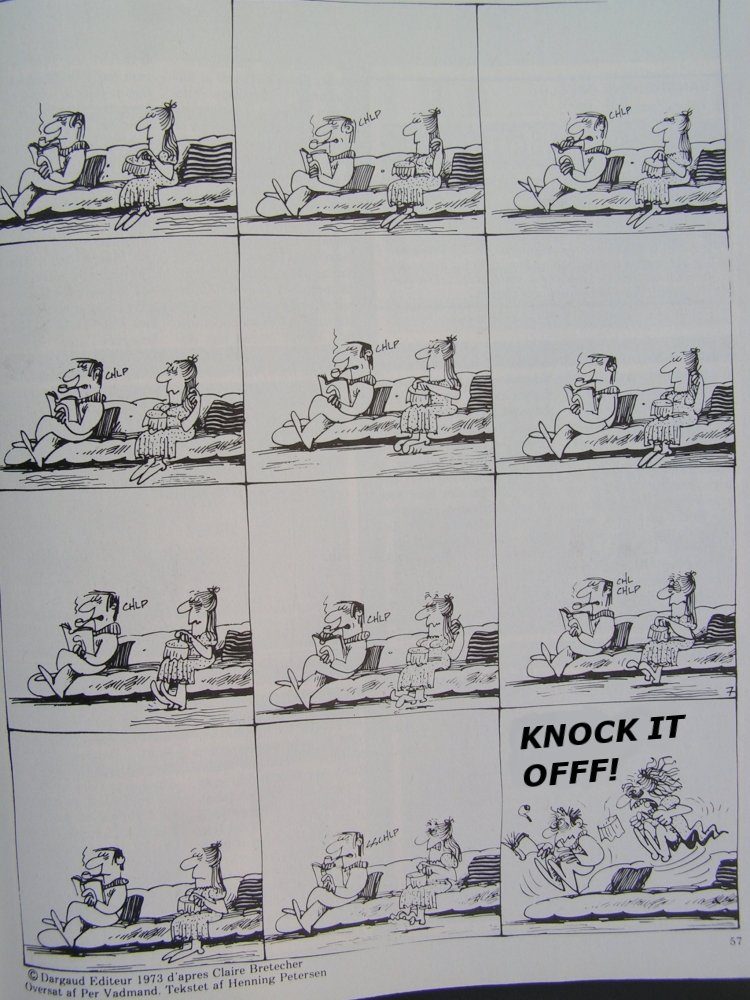
90% of conflicts at work do not come from something that was said, but from something that wasn’t said! It’s tempting to try and smooth things over and pretend everything is normal. Don’t. That’s the most common reason why conflicts at work escalate: Nobody does anything. Everyone’s waiting for the other guy to pull himself together and “just admit he’s wrong, dammit”. It may be unpleasant to tackle the issue here and now but believe me, it gets even more unpleasant after the conflict has stewed for a good long while.
3: Ask!
In the early stages of a conflict the most powerful tool to resolve it is simple: Ask! If somebody has done something that made you angry, if you don’t understand somebody’s viewpoint, if you don’t understand their actions - ask!
Do it nicely. “Say, I was wondering why you did ‘X’ yesterday” or “I’ve noticed that you often do ‘Y’. Why is that?” are good examples. “Why the hell do you always have to ‘Z’!” is less constructive :o)
Sometimes there’s a perfectly good reason why that person does what he does, and a potential conflict evaporates right there. Also: Never assume that people do what they do to annoy you or spite you. People typically have a good reason to do the things they do, even the things that really get on your nerves. Never assume bad faith on anyone else’s part. Instead: Ask!
For the rest of them just click here.
Tuesday, November 4, 2008
Election Day!!!!
Today is a special day, a day we can express ourselves but we must respect each other too. Here are some things to keep in mind when you go to the polls today.
VOTING MYTHS (MSN.com)
Myth: I will be turned away from the polls if I wear an Obama or McCain shirt.
NOT TRUE. You can't be turned away from the polls, but you may be asked to cover the parts of your clothing that are advertising your candidate. Certain states -- such as California, District of Columbia, Pennsylvania and New York -- restrict anything that can be considered campaign material within 50 to 150 feet of voting sites. If you've got questions, contact your state election official to find out the exact rules in your state, or, just be sure to bring an extra shirt or sweater for when you place your vote.
Myth: If something goes wrong -- I'm not on the voter rolls, forgot my ID, recently moved -- I can't vote.
NOT TRUE. You may need to take an oath affirming you're a citizen, and that you live where you say you do. But keep in mind that the burden of proof is on the person making the challenge, not you. If your right to vote is being challenged for any reason, call the Election Protection hotline at 1-866-OUR-VOTE (1-866-687-8683) to get immediate legal advice. You can also request a provisional ballot from poll officials.
Myth: If I registered to vote through ACORN, my registration is not valid.
NOT TRUE: While some ACORN voter registrations are being investigated, if you provided accurate information, your registration is valid. In case you encounter problems, call the Election Protection hotline at 1-866-OUR-VOTE (1-866-687-8683) or be sure to request a provisional ballot.
Myth: Absentee ballots don't count and are only used as tie-breakers.
NOT TRUE: Like provisional ballots, absentee ballots count as a regular vote in every state.
Myth: If you register to vote under your school address, you will be dropped from your parents' health insurance or lose financial aid.
NOT TRUE: In a recent Time Magazine report, officials in Montgomery, Virginia; Greenville, South Carolina; and El Paso, Colorado told students that their health care and financial aid would be in jeopardy if they were to cast a vote. There was just one problem with these warnings: They were entirely untrue. Time reports, "[A]ccording to youth-voter advocates and the IRS... these dire warnings were incorrect."
On the other hand, if you want to have a last minute election party, please read the following tips that will help you to have a great time:
ELECTION PARTY ETIQUETTE (iVillage.com)
VOTING MYTHS (MSN.com)
Myth: I will be turned away from the polls if I wear an Obama or McCain shirt.
NOT TRUE. You can't be turned away from the polls, but you may be asked to cover the parts of your clothing that are advertising your candidate. Certain states -- such as California, District of Columbia, Pennsylvania and New York -- restrict anything that can be considered campaign material within 50 to 150 feet of voting sites. If you've got questions, contact your state election official to find out the exact rules in your state, or, just be sure to bring an extra shirt or sweater for when you place your vote.
Myth: If something goes wrong -- I'm not on the voter rolls, forgot my ID, recently moved -- I can't vote.
NOT TRUE. You may need to take an oath affirming you're a citizen, and that you live where you say you do. But keep in mind that the burden of proof is on the person making the challenge, not you. If your right to vote is being challenged for any reason, call the Election Protection hotline at 1-866-OUR-VOTE (1-866-687-8683) to get immediate legal advice. You can also request a provisional ballot from poll officials.
Myth: If I registered to vote through ACORN, my registration is not valid.
NOT TRUE: While some ACORN voter registrations are being investigated, if you provided accurate information, your registration is valid. In case you encounter problems, call the Election Protection hotline at 1-866-OUR-VOTE (1-866-687-8683) or be sure to request a provisional ballot.
Myth: Absentee ballots don't count and are only used as tie-breakers.
NOT TRUE: Like provisional ballots, absentee ballots count as a regular vote in every state.
Myth: If you register to vote under your school address, you will be dropped from your parents' health insurance or lose financial aid.
NOT TRUE: In a recent Time Magazine report, officials in Montgomery, Virginia; Greenville, South Carolina; and El Paso, Colorado told students that their health care and financial aid would be in jeopardy if they were to cast a vote. There was just one problem with these warnings: They were entirely untrue. Time reports, "[A]ccording to youth-voter advocates and the IRS... these dire warnings were incorrect."
On the other hand, if you want to have a last minute election party, please read the following tips that will help you to have a great time:
ELECTION PARTY ETIQUETTE (iVillage.com)
- The Guest List: If you feel your friends can all handle it as adults, however, go ahead and invite people on both sides of the aisle. However, as host, you are responsible for your guests being comfortable. If things start to get heated or uncomfortable, it's your job to step in and diffuse the situation.
- Food and Decor: If all of your guests support the same candidate, feel free to have some fun with themed decorations, hors d'oeuvres and cocktails. However, if you have Democrats and Republicans coming -- then yes, it needs to be fair and balanced. In other words, if you're serving an Obama-tini, you should also have a McCain margarita.
- Talking Politics:
- Before you speak, know the company you're in. Never, never assume you know someone's politics, unless they've explicitly expressed that to you.
- Stick to the facts. Arguing a point is different than making it personal. "'How can you support a guy like that?'That's judgmental.
- Have an exit strategy. To get yourself out of a sticky situation, have a few lines ready: "I think we'll have to agree to disagree," or "I'd rather not talk about it, if that's okay." Stay calm until the tension passes.
- Think about why you're having the conversation. What's your goal? Trying to change someone's mind election night after they've cast their vote, you might be barking up the wrong tree.
- The Results Are In: No gloating. Think about how you would want to be treated. Etiquette is based on treating people with respect, consideration and honesty, and now is the time to fall back on those principles
Monday, November 3, 2008
Avoid the flu
Keeping the Germs Away
Flu season is October through early spring, and February is often the peak month. Chances are, when you're burrowed under the covers with a box of tissues by your bedside, you turn even greener with envy thinking of those people who seem to never get sick. Want to be one of them? We can't promise you'll never get hit with another cold or suffer another bout of the flu, but you can increase your odds of staying well with these strategies. If you do get sick, we've also included some tips for getting better faster.
While colds won't kill you, they can weaken your immune system to the point that other, more serious, germs can take hold in your body. Just think how many times your cold turned into bronchitis or a sinus infection. And given that the average American adult suffers two to three colds a year, that's a lot of opportunities for serious illness -- and just as many to prevent one!
There's even more incentive to prevent the flu: Every year in the United States about 200,000 people are hospitalized and 36,000 die from the flu or its complications.
1. Wash your hands and wash them often. The Naval Health Research Center conducted a study of 40,000 recruits who were ordered to wash their hands five times a day. The recruits cut their incidence of respiratory illnesses by 45 percent.
2. Wash your hands twice every time you wash them. When Columbia University researchers looked for germs on volunteers' hands, they found one handwashing had little effect, even when using antibacterial soap. So wash twice if you're serious about fending off colds.
3. Use this hand-drying strategy in public restrooms. Studies find a shockingly large percentage of people fail to wash their hands after using a public restroom. And every single one of them touches the door handle on the way out. So after washing your hands, use a paper towel to turn off the faucet. Use another paper towel to dry your hands, then open the door with that paper towel as a barrier between you and the handle. It sounds nuts, but it's an actual recommendation from the Centers for Disease Control to protect you from infectious diseases like cold and flu.
4. Carry hand sanitizer with you. Colds are typically passed not from coughing or kissing (although those are two modes of transmission) but from hand-to-hand or hand-to-object contact, since most cold viruses can live for hours on objects. You then put your hand in or near your mouth or nose, and voilà! You're sick. Carry hand sanitizer gel or sanitizing towelettes with you and you can clean your hands anytime, even if the closest water supply is 100 miles away. It works. One study of absenteeism due to infection in elementary schools found schools using the gel sanitizer had absentee rates from infection nearly 20 percent lower than those using other hand-cleaning methods.
5. Use your knuckle to rub your eyes. It's less likely to be contaminated with viruses than your fingertip. This is particularly important given that the eye provides a perfect entry point for germs, and the average person rubs his eyes or nose or scratches his face 20-50 times a day, notes Jordan Rubin, Ph.D., author of the book The Maker's Diet.
Get the rest from Readers Digest.
Flu season is October through early spring, and February is often the peak month. Chances are, when you're burrowed under the covers with a box of tissues by your bedside, you turn even greener with envy thinking of those people who seem to never get sick. Want to be one of them? We can't promise you'll never get hit with another cold or suffer another bout of the flu, but you can increase your odds of staying well with these strategies. If you do get sick, we've also included some tips for getting better faster.
While colds won't kill you, they can weaken your immune system to the point that other, more serious, germs can take hold in your body. Just think how many times your cold turned into bronchitis or a sinus infection. And given that the average American adult suffers two to three colds a year, that's a lot of opportunities for serious illness -- and just as many to prevent one!
There's even more incentive to prevent the flu: Every year in the United States about 200,000 people are hospitalized and 36,000 die from the flu or its complications.
1. Wash your hands and wash them often. The Naval Health Research Center conducted a study of 40,000 recruits who were ordered to wash their hands five times a day. The recruits cut their incidence of respiratory illnesses by 45 percent.
2. Wash your hands twice every time you wash them. When Columbia University researchers looked for germs on volunteers' hands, they found one handwashing had little effect, even when using antibacterial soap. So wash twice if you're serious about fending off colds.
3. Use this hand-drying strategy in public restrooms. Studies find a shockingly large percentage of people fail to wash their hands after using a public restroom. And every single one of them touches the door handle on the way out. So after washing your hands, use a paper towel to turn off the faucet. Use another paper towel to dry your hands, then open the door with that paper towel as a barrier between you and the handle. It sounds nuts, but it's an actual recommendation from the Centers for Disease Control to protect you from infectious diseases like cold and flu.
4. Carry hand sanitizer with you. Colds are typically passed not from coughing or kissing (although those are two modes of transmission) but from hand-to-hand or hand-to-object contact, since most cold viruses can live for hours on objects. You then put your hand in or near your mouth or nose, and voilà! You're sick. Carry hand sanitizer gel or sanitizing towelettes with you and you can clean your hands anytime, even if the closest water supply is 100 miles away. It works. One study of absenteeism due to infection in elementary schools found schools using the gel sanitizer had absentee rates from infection nearly 20 percent lower than those using other hand-cleaning methods.
5. Use your knuckle to rub your eyes. It's less likely to be contaminated with viruses than your fingertip. This is particularly important given that the eye provides a perfect entry point for germs, and the average person rubs his eyes or nose or scratches his face 20-50 times a day, notes Jordan Rubin, Ph.D., author of the book The Maker's Diet.
Get the rest from Readers Digest.
Friday, October 31, 2008
Happy Halloween!
Halloween Safety Tips
By The Children's Safety Zone
For Trick-or-Treaters
· Carry a flashlight
· Walk, don't run.
· Stay on Sidewalks
· Stay in familiar neighborhoods
· Don't cut across yards or driveways.
· Wear a watch you can read in the dark.
· Carry only flexible knives, swords or other props.
· Wear clothing with reflective markings or tape.
· Approach only houses that are lit.
· Stay away from and don't pet animals you don't know.
Parents
· Make your child eat dinner before setting out.
· Children should carry quarters so they can call home.
· Ideally, young children of any age should be accompanied by an adult.
· If your children go on their own, be sure they wear a watch, preferably one that can be read in the dark.
· Older children should know where to reach you and when to be home.
· You should know where they're going.
· Although tampering is rare, tell children to bring the candy home to be inspected before consuming anything.
Homeowners
· Make sure your yard is clear of such things as ladders, hoses, dog leashes and flower pots that can trip the young ones.
· Pets get frightened on Halloween. Put them up to protect them from cars or inadvertently bitting a trick-or-treater.
· If you do use candles, place the pumpkin well away from where trick-or-treaters will be walking or standing.
· Make sure paper or cloth yard decorations won't be blown into a flaming candle.
And now the funny part, if you want to know your "inner monster" check this out.
I hope you have a safety and fun Halloween!
By The Children's Safety Zone
For Trick-or-Treaters
· Carry a flashlight
· Walk, don't run.
· Stay on Sidewalks
· Stay in familiar neighborhoods
· Don't cut across yards or driveways.
· Wear a watch you can read in the dark.
· Carry only flexible knives, swords or other props.
· Wear clothing with reflective markings or tape.
· Approach only houses that are lit.
· Stay away from and don't pet animals you don't know.
Parents
· Make your child eat dinner before setting out.
· Children should carry quarters so they can call home.
· Ideally, young children of any age should be accompanied by an adult.
· If your children go on their own, be sure they wear a watch, preferably one that can be read in the dark.
· Older children should know where to reach you and when to be home.
· You should know where they're going.
· Although tampering is rare, tell children to bring the candy home to be inspected before consuming anything.
Homeowners
· Make sure your yard is clear of such things as ladders, hoses, dog leashes and flower pots that can trip the young ones.
· Pets get frightened on Halloween. Put them up to protect them from cars or inadvertently bitting a trick-or-treater.
· If you do use candles, place the pumpkin well away from where trick-or-treaters will be walking or standing.
· Make sure paper or cloth yard decorations won't be blown into a flaming candle.
And now the funny part, if you want to know your "inner monster" check this out.
I hope you have a safety and fun Halloween!
Thursday, October 30, 2008
Politics at work
Ten Tricks and Traps for Discussing Politics with Your Coworkers, Family, and Friends
By Debra Fine
selfgrowth.com
Typically, there are dozens of topics for "big conversations" at home and in the workplace. Now, there just seems to be one: the presidential elections. How can you participate in discussions about the candidates without risking your job, losing friends, or alienating your significant other? Here are 10 tricks and traps for discussing politics:
1. Know thyself. It may be okay for most people to talk politics, but take an honest look at yourself. Are your feelings so passionate that you'll let the conversation get out of control, and you'll lose your cool as soon as someone disagrees with you? If so, then steer the conversation in another
direction or leave the room.
2. Know others. Maybe you can keep your cool during a conversation about the presidential candidates, but judge whether those around you can do the same before you launch into a discussion with them. And remember:just because someone can have a polite conversation about gun control or religion doesn't necessarily mean that a "Barack vs. Hillary" debate will go well. When it comes to politics, choose your conversational partners carefully!
3. Agree to disagree. Your mission in life isn't to persuade everyone in your sphere to vote for your presidential candidate of choice - nor do youhave to come around to your conversational partner's point of view. Know when to end a conversation by agreeing to disagree.
4. Stay flexible. Your vote isn't cast in stone until it's - well, cast. One of the things that can come out of a conversation is that you might gain a different perspective, or you might learn something new. Stay open to that possibility.
5. Don't do all the talking. During a heated discussion, it helps to really listen to what your conversational partner is saying. That means giving the other person a fair chance to speak - and then really listening to what that person has to say.
6. Be polite. Just because you have strong political beliefs doesn't mean that you have to raise your voice or use harsh language. Keep it civilized, and that will be a cue for those around you to do the same.
7. Remember where you are. If you're in the office, at the dinner table, or at a cocktail party, bear that in mind - and don't start shouting as though you're in a football stadium. Keep your demeanor appropriate for your surroundings.
8. Detach yourself. You are not the individual for whom you're voting, so don't take criticism of your preferred candidate personally. If you're a Mitt Romney fan and your boss isn't, what's the big deal? Your boss isn't insulting you, so don't internalize his or her words.
9. Put it in perspective. You can still love your significant other, and you can still respect your coworkers and friends, even if they don't share your politics.
10. Smile! Maintain your sense of humor, and keep the atmosphere light. We're lucky enough to have an opportunity to participate in the political process, and that certainly is something to feel good about - regardless of your politics.
Keep these 10 tips in mind, and you'll come through the political
season with your relationships intact - even if the aspirations of your political candidate don't survive.
Subscribe to:
Posts (Atom)